18 October 2026
Why LeStallion Writing Journals Are the Productivity Tool You Actually Need
Presented by @lestallionwritingjournalsnews
For years, I treated my productivity like a puzzle that I could solve with the right app, the right system, or the perfect routine. I tried digital kanban boards, elaborate spreadsheets, and every to-do list software that promised a clean inbox. Each one worked for a few weeks, then faded into background noise. What I kept coming back to, what actually stuck, was something far simpler: a physical journal. Not just any journal, though. After testing dozens of notebooks over the last decade, I found that the design and quality of the journal itself can either support a productive rhythm or quietly sabotage it. That is where LeStallion writing journals come in, and why they have earned a permanent spot on my desk.
I should mention that I am not someone who jumps on bandwagons. I prefer tools that earn their place through consistent use. The first LeStallion journal I picked up felt different from the start. The paper had a smoothness that made my fountain pen glide without bleeding through to the next page. The binding lay flat no matter how much I wrote. These details matter more than most people realize because a journal that fights you is a journal you will stop using. A journal that disappears into your hand, that becomes an extension of your thinking, can change how you approach your day.
What Makes a Journal Productive?
Productivity is not about doing more things faster. It is about doing the right things with clarity and intention. A good journal supports that by giving you space to think, to capture ideas, and to review your progress without friction. LeStallion writing journals are built with this philosophy at their core. They are not just blank pages bound together; they are structured environments for your thoughts.
The paper weight, for instance, is thick enough to handle ink without ghosting, but thin enough that the journal remains portable. I have carried mine in a backpack for months and the cover shows only minor wear. The pages are lightly ruled, which helps keep handwriting legible without feeling restrictive. There is also a subtle dot grid option for those who prefer a bit more flexibility for sketches or diagrams. These small choices add up to a journal that adapts to how you work rather than forcing you to adapt to it.
Building a Habit That Lasts
Consistency is the secret to any productivity system. The best planner in the world is useless if you stop using it after two weeks. I have seen this pattern countless times: someone buys a beautiful leather-bound journal, uses it religiously for ten days, then abandons it because the experience felt awkward or the layout did not match their needs. LeStallion writing journals avoid this trap by being neutral enough to fit many methods while being pleasant enough to invite daily use.
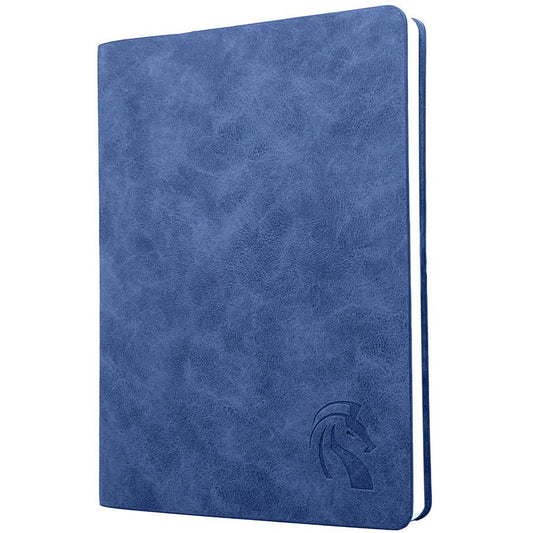
I personally use a simple system: each morning I write down three priorities for the day, then a short reflection in the evening. The journal does not dictate the format, but its quality makes the act of writing feel deliberate rather than rushed. Over time, that feeling becomes a trigger for the habit itself. When I open the journal, I am signaling to my brain that it is time to focus. The tactile experience matters. The sound of the paper, the way the pen moves, the slight resistance of the page turning. These sensory cues anchor the routine in a way that a screen cannot replicate.
Comparing Digital and Analog
Digital tools are powerful for searching, syncing, and sharing. They fall short when it comes to deep thinking and deliberate reflection. Studies have shown that writing by hand engages different neural pathways than typing, leading to better retention and more creative connections. I have experienced this myself. When I brainstorm a problem on paper, my thoughts flow in a more organic, nonlinear way. I can draw arrows, circle ideas, and cross things out without worrying about formatting. The messiness is part of the process.
But not all paper is equal. Cheap notebooks can bleed, smudge, or have pages that tear out too easily. That frustration breaks the flow. LeStallion writing journals solve this with high-quality materials that withstand heavy use. The pages are sewn in signatures, which means they lie flat and do not shed loose leaves over time. The covers are sturdy but flexible, so you can roll the journal back to write comfortably on a train or at a coffee shop. These are not luxury features; they are practical necessities for anyone who writes regularly.
Practical Examples From My Own Work
I work as a freelance writer and editor, which means my day is a mix of creative tasks, client communication, and administrative work. Without a system, I would lose track of deadlines and ideas constantly. Here is how I use my LeStallion journal in practice:
- Morning pages: I free-write for ten minutes to clear my head before starting work. This is not about productivity; it is about processing thoughts so they do not clutter the day.
- Daily priorities: I list three tasks that must get done, ranked by importance. I do not write more than three because anything beyond that becomes a wish list, not a plan.
- Meeting notes: I take notes by hand during calls. The act of writing helps me listen more actively, and I can later transfer key points to my digital system if needed.
- Idea capture: When inspiration strikes, I jot it down immediately. The journal lives on my desk, so it is always within reach.
- Weekly review: On Sunday evenings, I flip back through the week and note what worked, what did not, and what I want to adjust. This reflection is where the real growth happens.
This system is not revolutionary, and that is the point. The tool does not need to be complex. It needs to be reliable. LeStallion writing journals provide that reliability without getting in the way.
Why Quality Matters More Than You Think
There is a psychological effect to using a well-made tool. When you invest in something that feels good, you are more likely to use it with care and respect. A flimsy notebook from a drugstore encourages a disposable mindset. You scribble, you forget, you toss it aside. A journal that costs a bit more and is built to last signals to yourself that your thoughts are worth preserving. That shift in mindset can be surprisingly powerful.

I have seen this with clients I coach on productivity. Those who switch to a journal they actually enjoy using tend to stick with the practice longer. They develop a sense of ownership over their process. They look forward to opening the book rather than seeing it as a chore. That intrinsic motivation is far more sustainable than any external reward system.
Trade-Offs to Consider
No tool is perfect for everyone, and LeStallion writing journals have trade-offs worth noting. They are not cheap, especially compared to basic notebooks. If you are on a tight budget, the upfront cost might feel steep. However, considering that a single journal can last several months of daily use, the cost per day is minimal. Another trade-off is that they are not designed for extreme portability like a pocket notebook. The standard size fits in a bag but not in a pants pocket. If you need something to carry everywhere, you might pair it with a smaller companion notebook.
I also want to be honest about the learning curve. If you are used to typing everything, switching to handwriting can feel slow at first. That slowness is actually a feature, not a bug. It forces you to be more selective about what you write, which naturally leads to better thinking. But it does require an adjustment period. Give it two weeks of consistent use before judging whether it works for you.
How to Choose Your First LeStallion Journal
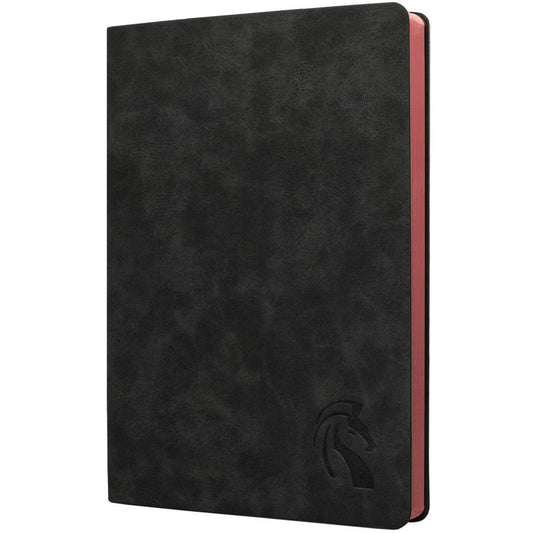
If you are considering trying LeStallion writing journals for the first time, start with the ruled or dot-grid version in the medium size. That is the most versatile option for everyday productivity. The cover color is a personal choice, but I recommend something neutral if you plan to keep it on your desk. The journal comes with a bookmark ribbon and an elastic closure band, which are small touches that make a difference when you are on the go.
You might also want to experiment with different pens. Fountain pens work beautifully on the paper, but a good gel pen or fine-liner will also perform well. Avoid anything too wet or too broad until you get a feel for the paper surface. Once you find your combination, the writing experience becomes a pleasure in itself.
Final Thoughts
Productivity is a personal journey. What works for one person may fail for another. But after years of trying every system and tool I could find, I keep coming back to the simple act of writing by hand in a journal that respects the process. LeStallion writing journals have become my go-to because they balance craftsmanship with practicality. They do not promise to organize your life for you; they provide a space where you can do that work yourself. And that, in my experience, is the most honest and effective kind of productivity tool there is.
If you have been struggling to maintain a journaling habit or feel stuck in a digital productivity rut, give yourself permission to try something analog. Pick up a journal that feels good in your hands, set aside ten minutes each day, and see what happens. The results might surprise you. They certainly surprised me.